The Weight of ritual
Tokyo wakes quietly, despite its reputation for noise. Before the trains swell and the crossings begin their familiar choreography, there are streets that still belong to delivery drivers, old men washing storefronts, and the occasional cyclist disappearing into the blue light of dawn. Somewhere within those quieter neighborhoods, behind an ordinary entrance you could easily pass without noticing, sumo wrestlers are already training.
The first thing you hear is not shouting, but impact. A deep, concussive sound that travels through the wooden walls and settles into your chest. Inside the stable, bodies move across the clay with startling force and precision. Wrestlers stamp their feet into the dohyō, repeating motions that seem less rehearsed than inherited. Sweat darkens the floorboards. Steam rises from the room. The air carries the dense smell of clay, effort, and cooked rice.
Watching them train in person alters your understanding of the sport entirely. On television, sumo often appears abbreviated, reduced to a few explosive seconds before commentary and replay. But practice reveals the long architecture beneath those moments. The endless repetitions. The ritual. The hierarchy. Young wrestlers clean the stable floors, prepare meals, carry equipment, and serve the higher-ranked men without question. There is very little speaking. Everyone appears to understand their place instinctively, as though the order of the room existed long before they arrived and will remain long after they leave.
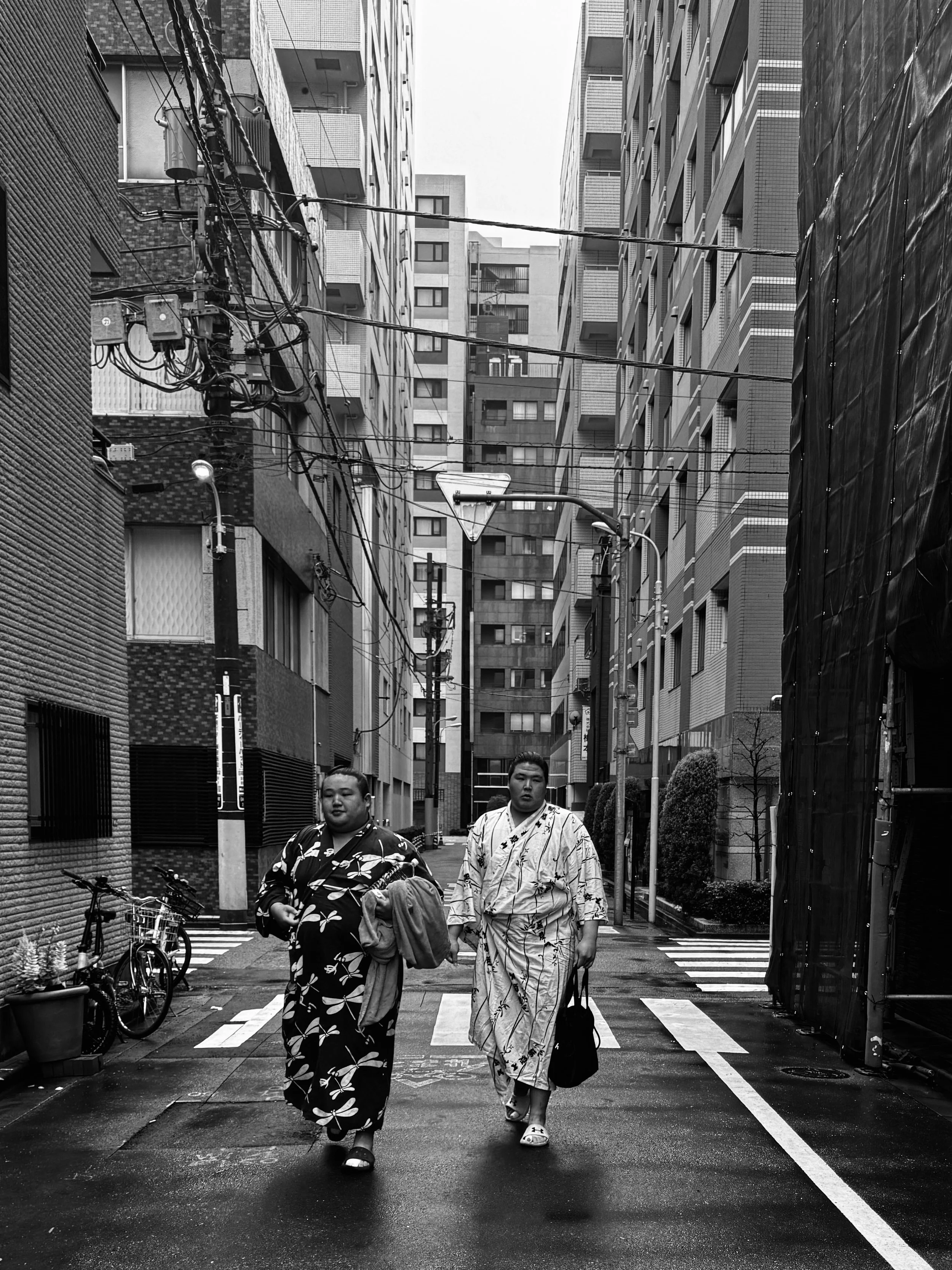
The discipline is severe but strangely restrained. Corrections are physical, immediate, and unsentimental. A wrestler is driven backward repeatedly until his footing improves. Another is forced lower into his stance again and again. There is no performance of encouragement. No theatrics. Improvement is considered inevitable if the body can withstand enough repetition.
Yet what stays with you are the quieter gestures hidden beneath the hardness. A senior wrestler adjusts the robe of a younger trainee without a word. Someone is pouring tea for another after drills conclude. The silence between them begins to feel less cold than deeply familiar, the silence of people who no longer need language to explain what the work requires.
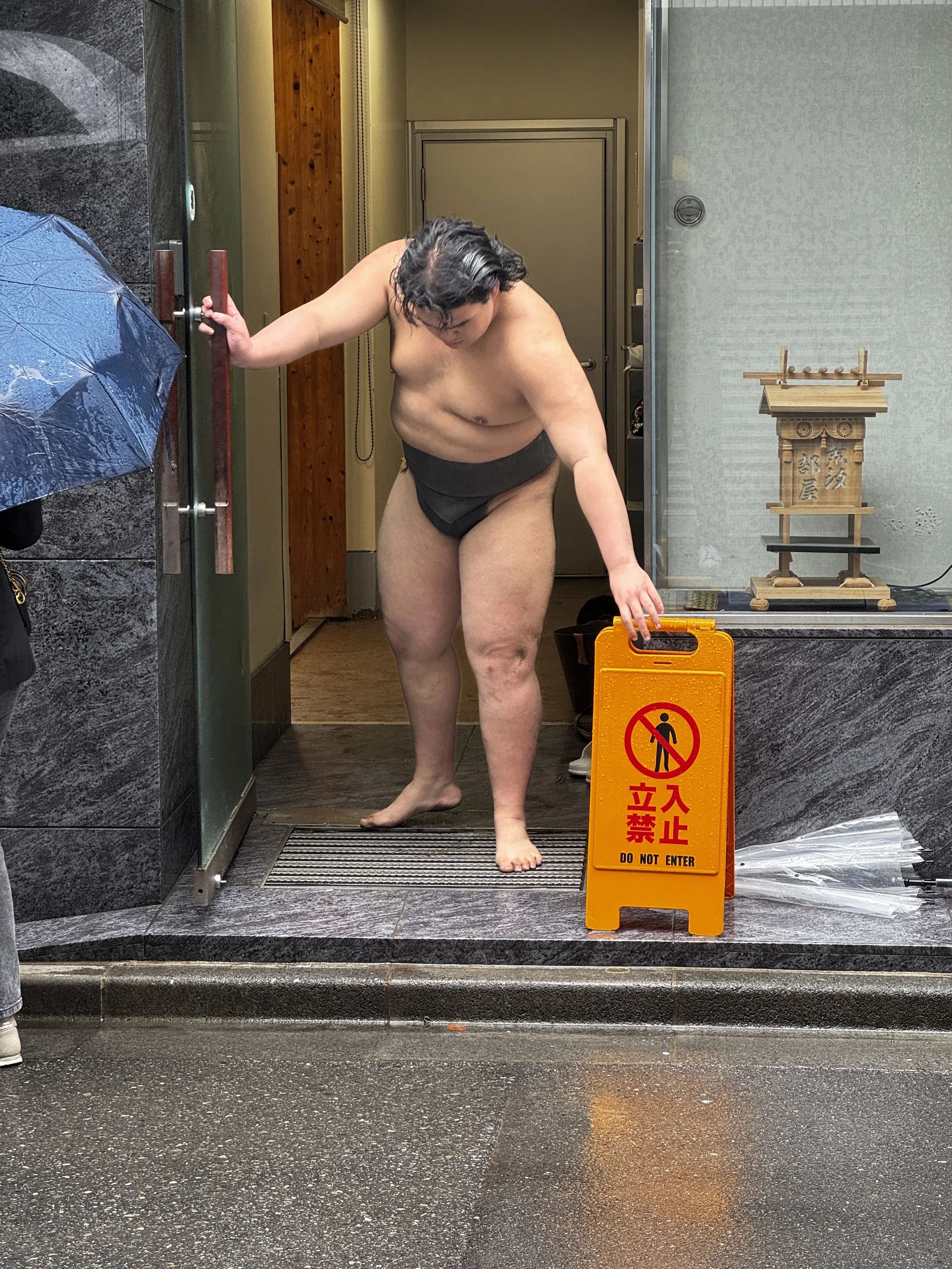
What makes sumo in Tokyo particularly moving is the contrast surrounding it. Outside the stable doors is one of the most technologically accelerated cities in the world: screens layered atop screens, immaculate convenience, relentless movement. Inside, almost nothing appears to have surrendered to modernity. The wrestlers wear traditional topknots and wooden sandals. Ritual gestures precede every exercise. The stable itself operates according to customs that feel centuries old. Not preserved for tourists, but lived.
There is a temptation, especially as an outsider, to romanticize this resistance to change. But standing there, watching these wrestlers move across the clay before sunrise, it felt less like resistance and more like continuity. Sumo survives because it occupies a space modern life no longer knows how to create: one built entirely around patience, repetition, hierarchy, and physical devotion.
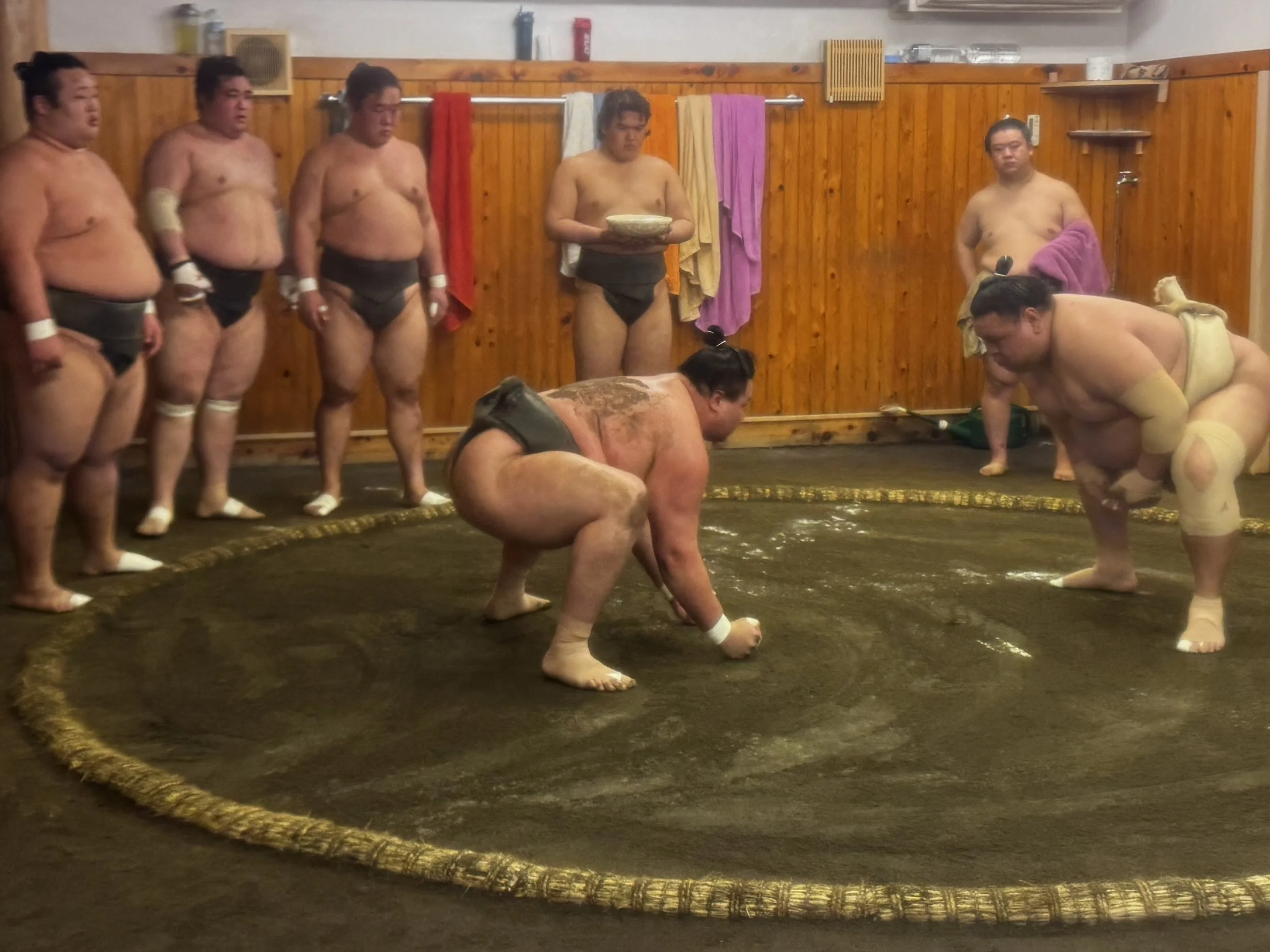
I found myself watching their balance more than their size. Despite their enormous frames, the wrestlers move with remarkable delicacy. Their feet grip the clay with precision. Every shift in weight matters. Beneath the collisions is something unexpectedly elegant, almost choreographic. The violence is real, but so is the grace.
By the time training ended, the city outside had fully awakened. Trains thundered overhead. Office workers hurried past convenience stores, holding cans of coffee and umbrellas. Yet inside the stable, the rhythm remained unchanged. It occurred to me then that sumo is not merely a sport in Japan. It is a living archive, carried forward by bodies willing to submit themselves daily to tradition, exhaustion, and ritual to keep something ancient alive.